
Mortgage rates today sit noticeably higher than they did a month ago, and the move happened quickly. The average 30-year fixed rate reached 6.95% in the week to 17 September 2026, up from 6.76% a week earlier. Behind that jump is the Federal Reserve’s first interest rate increase since 2023. This guide explains the numbers, the cause and what they mean for an actual monthly payment.
Mortgage rates today: the latest numbers
Freddie Mac’s weekly survey is the benchmark most lenders and reporters use. Its latest reading put the 30-year fixed-rate mortgage at 6.95%.
The 15-year fixed averaged 6.26% in the same week, up from 6.09%. Both figures have climbed for three consecutive weeks, after starting September at 6.71% and 6.09% respectively.
Sam Khater, Freddie Mac’s chief economist, framed the move carefully. The 30-year rate “continues to fluctuate as markets assess economic data,” he said, which is about as much certainty as anyone is offering right now.
How mortgage rates today compare with a year ago
A year ago the 30-year average stood at 6.26%, and the 15-year sat at 5.41%. Both are therefore close to seven tenths of a percentage point higher now.
That gap sounds small and is not. On a $400,000 loan it works out to roughly $183 more every month, which is more than $2,100 a year.
Buyers who were pre-approved in the spring are feeling this directly. A pre-approval letter locks in an affordability estimate, not a rate, so many households are discovering that their budget shrank while they were house hunting.
Why mortgage rates today jumped this week
The Federal Reserve raised its benchmark rate on 16 September, lifting the target range to between 3.75% and 4%. It was the first increase in more than three years, and the vote was unanimous.
Officials pointed to inflation driven in part by rising oil prices. They also signalled that another increase is likely before the end of the year.
Markets reacted immediately, and mortgage pricing followed within days. Consequently the weekly survey captured a jump that had already happened in the bond market.
What the Fed actually controls
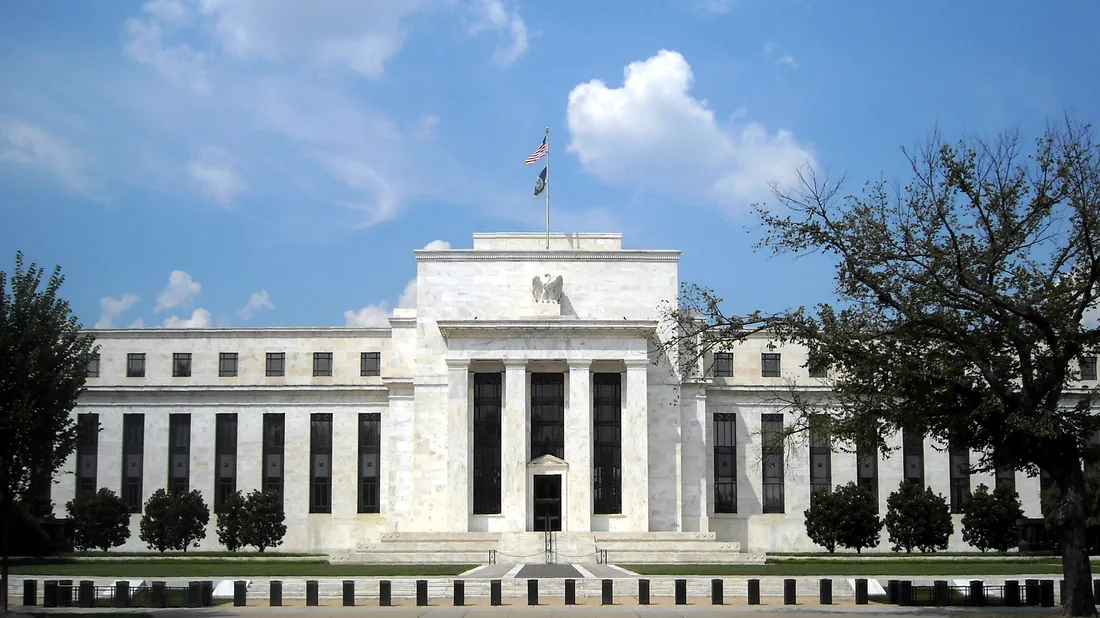
This is the most widely misunderstood part of the subject. The Federal Reserve does not set mortgage rates, and no Fed announcement changes a 30-year quote directly.
What the Fed sets is the federal funds rate, which is the overnight rate banks charge each other. That rate directly influences credit cards, car loans and home equity lines.
Mortgages work differently, because they are long-term loans funded through the bond market. Their pricing tracks longer-dated yields, and those yields respond to expectations rather than to today’s announcement.
The 10-year Treasury connection
If you want a single number to watch, use the 10-year Treasury yield. It has been hovering near 4.96%, and 30-year mortgage rates typically run one and a half to two percentage points above it.
That spread is not fixed. It widens when lenders see more risk or less liquidity, and it narrows when conditions calm. Much of the movement in 2023 and 2024 came from the spread rather than from Treasury yields themselves.
The practical takeaway is simple. When the 10-year yield rises, expect mortgage quotes to follow within a day or two.
What mortgage rates today mean for a monthly payment
Abstract percentages are hard to feel, so here is the arithmetic on a $400,000 loan over 30 years.
At 6.95%, principal and interest come to about $2,648 a month. At last week’s 6.76% the same loan cost roughly $2,597. The difference is about $51 a month, or more than $18,000 across the full term.
At the 6.26% average from a year ago, that payment would have been around $2,465. None of these figures include property taxes, homeowners insurance or mortgage insurance, all of which add meaningfully to the real monthly cost.
15-year versus 30-year
The shorter loan carries a lower rate, currently 6.26% against 6.95%. It also carries a much higher payment.
On the same $400,000, a 15-year loan at 6.26% costs about $3,432 a month. That is roughly $784 more than the 30-year option, although total interest paid falls dramatically.
Which one makes sense depends on cash flow rather than on arithmetic alone. A 30-year mortgage with voluntary extra payments gives similar savings with far more flexibility if income changes.
Points, credit scores and the rate you are quoted
Survey averages describe the market, not your offer. Several factors move a personal quote away from the headline.
Credit score matters most. A borrower above 780 typically sees materially better pricing than one in the low 700s. Loan-to-value ratio comes next, and a deposit below 20% usually triggers mortgage insurance on a conventional loan.
Discount points complicate comparisons further. Paying one point, meaning 1% of the loan amount upfront, typically buys down the rate by around a quarter of a percentage point. Always compare quotes at the same number of points, otherwise the comparison is meaningless.
Should you wait for mortgage rates today to fall?
This is the question everyone asks, and honest answers are uncomfortable. Nobody reliably forecasts rates, including the institutions that publish forecasts.
What can be said is that the Fed has signalled at least one more increase this year. That suggests limited downward pressure in the short term, although mortgage pricing can move independently of the policy rate.
The practical framing is different. Buy when the payment works within your budget and the house suits your life. Rates can be refinanced later; a purchase price cannot.
Refinancing maths in a rising market
Refinancing activity falls sharply when rates rise, for obvious reasons. Most existing borrowers hold loans well below today’s pricing.
Two situations still justify a look. Borrowers holding adjustable-rate mortgages approaching reset may prefer certainty. Homeowners with significant equity sometimes consolidate higher-cost debt, although that converts unsecured debt into debt secured against the house.
The break-even calculation is the test. Divide total closing costs by the monthly saving, and the result is how many months you must stay to come out ahead.
What to expect for the rest of 2026
Markets currently price in one more quarter-point increase before the end of the year, with further tightening possible in 2027. If that path holds, meaningful relief on mortgage pricing looks unlikely before spring.
Oil prices are the wildcard. Because the current inflation impulse is partly energy-driven, a sustained fall in crude would change the outlook quickly.
Housing supply matters too. Higher rates lock existing owners into cheap mortgages, which keeps listings scarce and supports prices even as demand weakens. That dynamic has defined the market since 2022 and shows no sign of breaking.
How to shop for the best rate
Comparison shopping remains the single highest-return hour in the whole process. Studies of lender pricing consistently find meaningful spreads between quotes on the same day.
Gather at least three loan estimates, and gather them within a short window. Credit bureaus treat multiple mortgage enquiries inside roughly 45 days as a single event, so the score impact is minimal.
Compare the annual percentage rate alongside the headline rate, because APR folds in fees. Then ask each lender about rate locks, extension costs and float-down options, since those terms vary far more than the rate itself.
How adjustable-rate mortgages look right now
Adjustable-rate products become more popular whenever fixed pricing climbs. The logic is straightforward, since the introductory rate usually sits below the 30-year fixed.
A typical structure fixes the rate for five, seven or ten years, then adjusts annually against an index. Caps limit how far the rate can move at each adjustment and across the life of the loan.
The risk is easy to state and easy to underestimate. If rates are higher at the first adjustment, the payment rises, and the household must absorb it. Anyone considering one should check the worst-case payment under the lifetime cap rather than the introductory figure.
First-time buyers and the programmes that still help
Several routes reduce the deposit barrier, and they matter more when monthly costs rise. FHA loans allow deposits as low as 3.5% for qualifying borrowers, at the cost of mortgage insurance premiums.
VA loans remain the strongest option for eligible veterans and serving personnel, because they require no deposit and no monthly mortgage insurance. USDA loans serve designated rural areas on similar terms.
State housing finance agencies run their own assistance programmes too. These vary enormously by state, and they often combine a below-market rate with deposit assistance. Because funding is limited, they usually operate first come, first served.
What mortgage rates today mean for renters
Renters feel this market indirectly, although the effect is real. When buying becomes less affordable, households stay in rental accommodation longer, which tightens supply.
Higher borrowing costs also slow new construction. Developers finance projects with debt, so fewer units break ground when rates climb, and that shortage arrives two or three years later.
The result is a squeeze from both directions. Consequently rent growth tends to firm up during sustained periods of expensive mortgage credit, even though the connection is rarely obvious to the tenant writing the cheque.
Where 7% sits in historical terms
Context helps, because recent memory distorts judgement. Mortgage rates today feel punishing to anyone who bought or refinanced between 2020 and 2021, when 30-year pricing briefly fell under 3%.
Look back further and the picture changes. The long-run average for the 30-year fixed since the early 1970s sits above 7%, and the rate exceeded 18% in the early 1980s. The cheap money of the pandemic years was the anomaly, not the norm.
None of that makes today’s payments easier. House prices rose sharply while rates were low, so buyers now face expensive credit and expensive property at the same time. That combination is genuinely unusual, and it explains why affordability measures sit near multi-decade lows despite rates that earlier generations would have considered ordinary.
The useful conclusion is about expectations rather than comfort. Anyone waiting for a return to 3% is waiting for conditions that required a global emergency and years of extraordinary central bank intervention.
Frequently asked questions
What are mortgage rates today?
The 30-year fixed average is 6.95% and the 15-year fixed average is 6.26%, according to Freddie Mac’s survey for the week to 17 September 2026.
Will mortgage rates today keep rising?
Markets expect one further Federal Reserve increase in 2026. That points to continued pressure, although mortgage pricing depends on bond yields rather than on the policy rate alone.
Does the Federal Reserve set mortgage rates?
No. The Fed sets the federal funds rate. Mortgage pricing follows long-term bond yields, particularly the 10-year Treasury.
How much does a quarter of a point cost?
On a $400,000 loan over 30 years, a quarter-point difference changes the monthly payment by roughly $67. Over the full term that is more than $23,000.
The bottom line
Mortgage rates today have moved against borrowers over the past three weeks, and the Federal Reserve has signalled it is not finished. Anyone shopping now should assume the current environment persists into next year rather than betting on a quick reversal.
Shop several lenders, compare quotes at the same number of points, and judge affordability on the payment rather than on the headline percentage. For more on the economy, see our business coverage, and read our standards on the about page. The weekly survey itself is published by Freddie Mac.
Leave a Reply