
The Tesla Roadster finally has a date. Invitations sent to reservation holders point to an unveiling on 1 October 2026 in Waco, Texas, and Tesla’s own “Go for launch” teaser appeared on 12 September. After nearly nine years of delays, the car first shown in 2017 is about to be shown again. Here is what is confirmed, what has quietly changed and what remains pure promise.
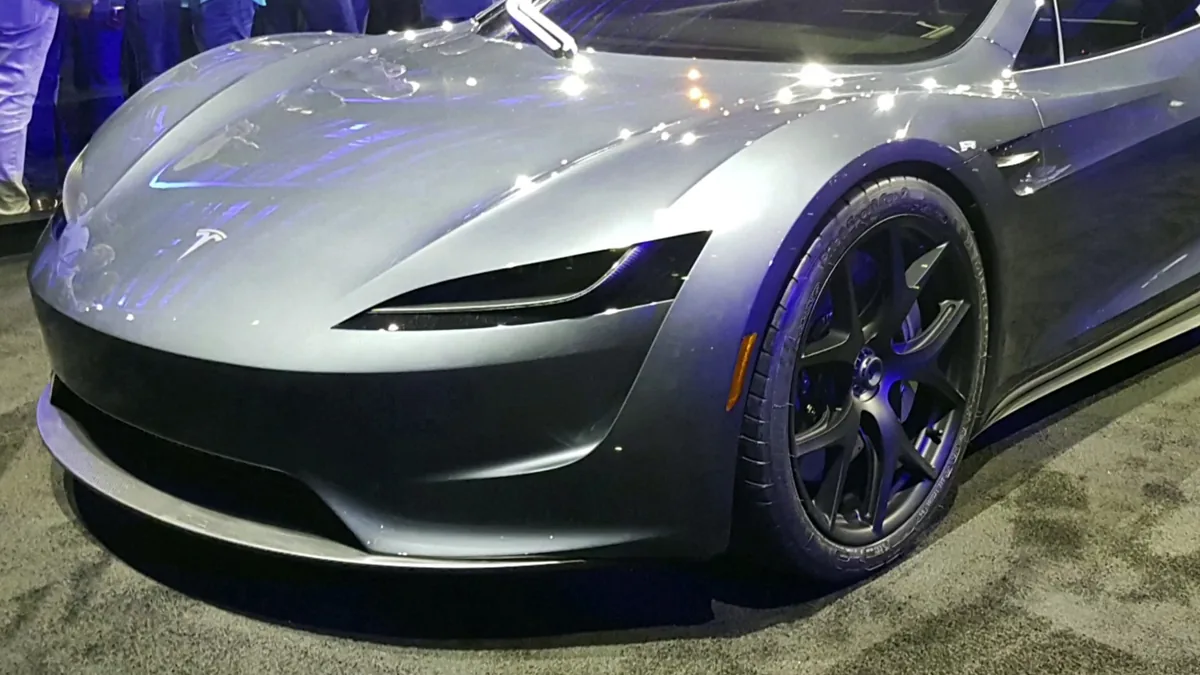
Tesla Roadster reveal date and location
The event is set for Thursday 1 October. Reporting based on the invitations places it in Waco, Texas, rather than at the Austin factory where Tesla has held recent launches.
Tesla confirmed the timing publicly with a short teaser on its X account. A countdown clock also went live on the model page of the company website.
Nothing about the format has been announced. Previous Tesla reveals have mixed a stage presentation with test rides for invited guests, although the company has not said whether demonstration drives will happen this time.
What the Tesla Roadster will cost
Nobody outside the company knows. That is the honest answer, and it is also new.
In 2017 Tesla listed a base price of $200,000 and a Founders Series at $250,000, limited to 1,000 cars. Those figures have now disappeared from the website, and no replacement numbers have been published.
Most analysts therefore treat $200,000 to $250,000 as an estimate rather than a list price. Inflation since 2017, higher battery material costs and any added hardware all point upwards. Consequently a higher final figure would surprise few people who follow the company closely.
The specifications Tesla promised in 2017
The original claims were extraordinary, which is partly why the car became famous before it existed. Tesla quoted 0 to 60 miles per hour in 1.9 seconds.
It also promised a top speed above 250 miles per hour, a range of 620 miles and a 200-kilowatt-hour battery. Wheel torque was quoted at 10,000 newton-metres, a number designed for headlines rather than comparison.
None of these figures has been independently verified, and Tesla has not restated them recently. The reveal will show which targets survived nine years of engineering reality.
The SpaceX package
In 2018 Elon Musk added a claim that went further still. An optional SpaceX package would use cold gas thrusters, fed by a pressurised tank, to improve acceleration, braking and cornering.
He later suggested the package could cut the 0 to 60 time to around 1.1 seconds. Pre-reveal reporting says aerospace-derived hardware remains part of the plan, though details are thin.
Road legality is the obvious question. Thrusters on a street car raise safety, noise and regulatory issues that no production vehicle has had to answer. Therefore any version sold to the public may differ significantly from the concept Musk described.
Why the Tesla Roadster took so long
The original plan targeted production in 2020. That date slipped, then slipped again, and the car effectively went quiet for several years.
Tesla’s explanation was consistent. Resources went first to the Model Y, then to the Cybertruck, and later to the company’s autonomy and robotics work. A low-volume halo car was never going to outrank a mass-market product.
Supply chain disruption during the pandemic added further delay. Battery cells were scarce, and a 200-kilowatt-hour pack would have consumed cells that could otherwise power several ordinary cars.
What happened to the deposits
Reservation terms were unusually steep. Base reservations required a $50,000 deposit, while Founders Series buyers paid the full $250,000 upfront.
Those buyers have now waited close to nine years. Tesla has allowed refunds on request, and some reservation holders have taken them. Others kept their place, betting that the car would eventually arrive.
How Tesla treats those early customers on pricing will be closely watched. If the final price rises, holders of 2017 reservations will want to know whether their original terms apply.
When deliveries could actually start
A reveal is not a production launch. Current reporting points to production beginning in 2027, and Tesla has not announced any delivery schedule for 2026.
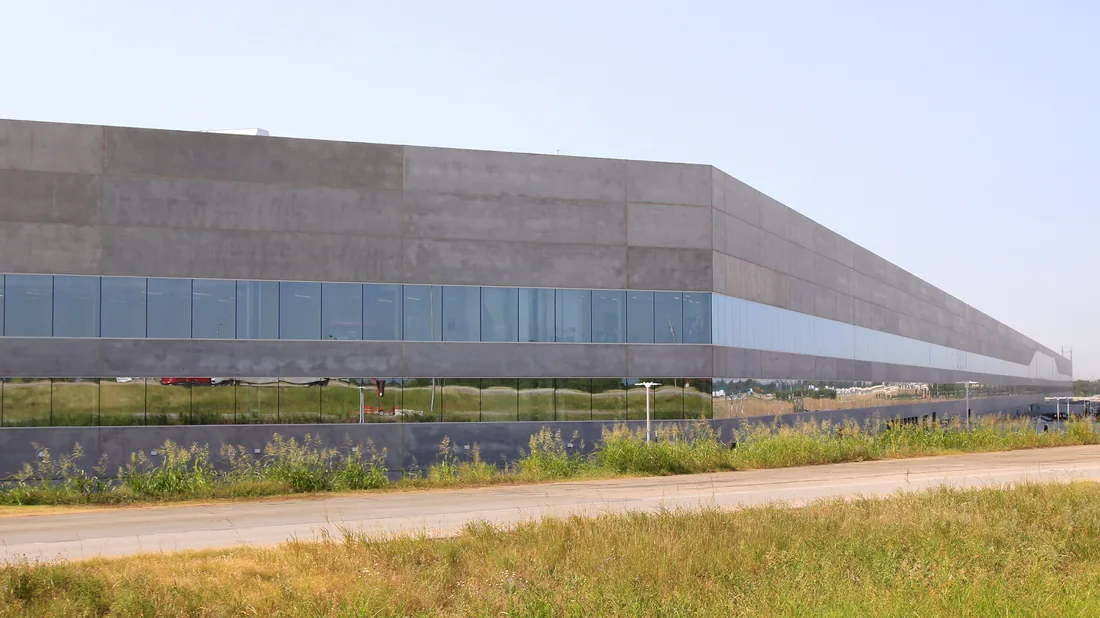
The car is expected to be built in Texas. Gigafactory Texas near Austin already produces the Model Y and the Cybertruck, so it is the natural candidate, although Tesla has not confirmed the exact line.
History suggests caution. Tesla’s first deliveries of a new model often arrive later and in smaller numbers than launch presentations imply. Early production is typically slow while the line is tuned.
The original Roadster that started it all
The name carries real history. Tesla’s first car, also called the Roadster, went on sale in 2008 and was built on a chassis derived from the Lotus Elise.
Roughly 2,450 were made before production ended in 2012. It proved that an electric car could be fast and desirable, which was far from obvious at the time.
One example became unusually famous. In February 2018 SpaceX launched Musk’s own Roadster into space on the first Falcon Heavy test flight, with a mannequin nicknamed Starman in the driver’s seat. It remains in orbit around the Sun.
What the Tesla Roadster means for the business
Financially, the Tesla Roadster barely matters. Even a few thousand units a year at $250,000 would be a small fraction of Tesla’s revenue.
Strategically, it matters more. A halo car shapes brand perception, and Tesla’s brand has taken damage over the past two years through slowing sales growth and controversy around its chief executive.
A spectacular product could reset the conversation. Equally, another reveal followed by another long delay would reinforce the criticism that Tesla announces far more than it ships. Investors will watch the delivery timeline more closely than the acceleration figures.
How the Tesla Roadster compares with the competition
The electric hypercar field has filled up while the Roadster waited. The Rimac Nevera already delivers extreme acceleration, although at a price well above $2 million.
Porsche, Lotus and several Chinese manufacturers now sell high-performance electric cars in volume. Consequently the Roadster no longer arrives into an empty market, as it would have in 2020.
Its likely advantage is price. If Tesla can deliver hypercar performance at a fraction of hypercar cost, the case remains strong. If the price climbs well beyond $250,000, that advantage narrows quickly.
Charging a car with a battery this large
A 200-kilowatt-hour pack would be roughly two and a half times the size of the battery in a long-range Model 3. That creates practical questions that rarely appear in launch presentations.
Home charging would take a long time on a standard wall unit, even overnight. Fast charging depends on the peak rate the car accepts, and Tesla has not said what the Roadster will support.
Most owners will never drain the pack on a normal day, of course. In practice the large battery matters more for sustained track driving and for bragging rights than for the daily commute.
Safety and regulation questions
Every road car sold in the United States must meet federal motor vehicle safety standards. Extreme acceleration is legal, although crash protection, lighting and braking rules still apply in full.
The thruster concept is the unknown here. No existing standard contemplates a car that vents pressurised gas to change direction. Regulators would almost certainly need to review it, and any approval could take considerable time.
Insurance is the quieter hurdle. Insurers price extreme performance cars cautiously, and early owners of the Tesla Roadster should expect premiums that reflect both the value and the capability of the car.
A long promise meets a short attention span
Nine years is a long time in the car industry. Several models have been launched, updated and retired in the period since the Roadster was first shown.
That gap shapes how the reveal will be received. Enthusiasts remain curious, but general audiences have heard these promises before. Therefore the reaction on 1 October will depend less on spectacle and more on believable dates.
What to watch on 1 October
Four details will tell the real story. First, the confirmed price for each version. Second, the production date and the first delivery window.
Third, verified performance figures rather than targets. Finally, whether the SpaceX package appears as a real option with a real price, or remains a future promise.
Anything missing from that list after the event is worth treating as uncertain. We will update this article once the presentation is over.
The engineering problems behind the Tesla Roadster targets
Each headline figure hides a difficult trade-off. A 620-mile range needs a very large battery, and a very large battery adds weight that works against acceleration and handling.
Sub-two-second acceleration raises a different problem. Tyres, not motors, usually limit launch performance, because a road tyre can only transmit so much force before it slips. Several electric cars already have the power to go faster than their tyres allow.
Top speed brings aerodynamic and thermal limits. Holding 250 miles per hour demands enormous sustained power, and it drains a battery quickly while generating heat. Consequently the most likely outcome is that some targets arrive intact while others are quietly revised.
What reservation holders should do now
Anyone holding a 2017 reservation should check the account page for updates before the event. Tesla has historically contacted reservation holders ahead of configuration opening.
Read the terms carefully once they appear. Price protection, configuration windows and refund conditions are the details that matter, and they may differ from the original agreement.
Keep records of the original deposit receipt as well. If questions arise about which terms apply, the paperwork from 2017 will be the reference point.
How the market is likely to react
Tesla shares often move around product events, although rarely in a predictable direction. Investors typically sell on vague timelines and reward concrete production dates.
Analysts will focus on margin rather than excitement. A $250,000 car with a high bill of materials may not add much profit, especially in low volumes during the first year.
The broader signal matters more than the car itself. A clean reveal with a firm delivery date would suggest Tesla can still execute on ambitious projects, which is the question hanging over its robotaxi and humanoid robot plans too.
Frequently asked questions
When is the Tesla Roadster reveal?
Invitations point to Thursday 1 October 2026 in Waco, Texas. Tesla has confirmed the date with a public teaser and a countdown on its website.
How much will the Tesla Roadster cost?
Tesla has not published a price. The 2017 figures of $200,000 and $250,000 have been removed, so most estimates now sit at or above that range.
When can I buy one?
Production is expected to begin in 2027. Tesla has not announced a delivery schedule.
Is the SpaceX thruster option real?
It has been promised since 2018, and pre-reveal reporting says aerospace-derived hardware is still planned. Final details, and road legality, remain unconfirmed.
The bottom line
After nine years, the car is finally about to reappear. What matters now is not the acceleration figure but the price, the production date and whether the company can deliver on schedule.
For more coverage of companies and markets, visit our business section, and see how we report on the about page. The official countdown is on the Tesla website.
Leave a Reply