
Camp David returned to the headlines this weekend, and for two separate reasons. President Donald Trump cut short a stay at the Maryland retreat and returned to the White House on Saturday evening, earlier than his published schedule indicated. Hours before that, a fighter jet intercepted a small aircraft that had drifted into the restricted airspace above the site. Both stories send people searching for the same basic question: what exactly is this place?
What happened at Camp David this weekend
Trump had been spending the weekend at the retreat and was scheduled to return to Washington on Sunday. Instead he flew back on Saturday evening. The White House gave no reason for the change.
The timing drew attention because of the situation in the Middle East. Reporting linked the early return to deliberations over the conflict with Iran. Mohsen Rezaei, secretary of Iran’s Supreme National Security Council, had warned that Tehran was prepared for what he called a decisive war if Washington rejected its demands.
No official statement connected the two events. Nevertheless, an unscheduled departure from the presidential retreat tends to be read as a signal, whether or not one was intended.
The F-16 intercept over Thurmont
Earlier on Saturday, 19 September, a North American Aerospace Defense Command F-16 intercepted a general aviation aircraft near Thurmont, Maryland. The pilot had entered the temporary flight restriction that surrounds the retreat when the president is present.
According to the Defense Visual Information Distribution Service, the fighter dispensed flares during the intercept to get the pilot’s attention. It then escorted the aircraft safely out of the restricted zone. First Air Force followed up with a public reminder for pilots to check notices to air missions before departure.
This was not a one-off. A similar interception happened over the same area in June 2026, also while the president was at the site. Small aircraft wandering into presidential airspace is a recurring and largely mundane problem.
What Camp David actually is
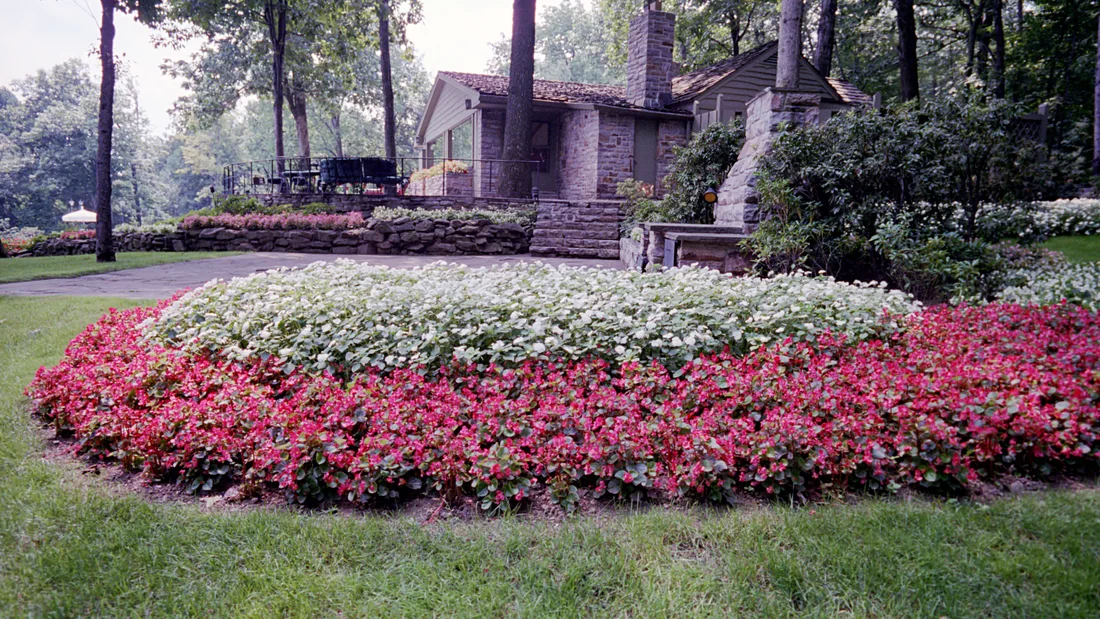
The formal name is Naval Support Facility Thurmont. It sits in the Catoctin Mountains in Frederick County, Maryland, roughly 60 miles north-west of Washington.
The US Navy operates the facility, and Marine Corps personnel provide security. Presidents usually arrive by helicopter, and the flight from the South Lawn takes about half an hour. That short hop is the entire point, because it puts a secure rural compound within easy reach of the capital.
Despite the rustic cabins, this is a working military installation. Communications infrastructure allows a president to run the government from the site, which is why it functions as an alternative command post rather than a holiday home.
Inside the compound
The buildings are named after trees, a convention that has survived since the 1940s. Aspen Lodge is the presidential cabin, and it holds the office where many consequential decisions have been taken.
Laurel Lodge contains the main conference room and dining facilities, and it is where formal negotiations usually happen. Guest cabins carry names such as Birch, Dogwood, Hickory, Holly and Maple.
Recreation was always part of the design. There is a swimming pool, a tennis court, a bowling alley, a skeet range and miles of walking and cycling trails. Evergreen Chapel, completed in 1991, serves the resident personnel as well as visiting families.
Why presidents keep going back
Every administration uses the retreat differently, yet the underlying appeal rarely changes. It offers privacy without distance, which no other presidential facility provides.
Franklin Roosevelt wanted somewhere cooler than Washington in summer and secure enough for wartime. Dwight Eisenhower used it for quiet diplomacy. Ronald Reagan spent more weekends there than almost any other president, while George W. Bush relied on it heavily after the September 11 attacks.
The isolation also does diplomatic work. Delegations cannot easily leave, journalists cannot get close, and negotiators lose the option of walking out to a waiting camera. That constraint has repeatedly produced results that formal summits could not.
The airspace rules around Camp David
A permanent prohibited area covers the site, and it tightens whenever the president is in residence. Pilots are expected to check notices before flying anywhere near it.
Violations trigger a standard sequence. Fighter aircraft intercept, attempt radio contact, and use flares if the pilot does not respond. Most incidents end with an escort out of the zone and a conversation with the authorities on landing.
Consequently these events look dramatic and are usually routine. General aviation pilots on cross-country flights are the most common offenders, and navigation error rather than intent is the normal explanation.
Camp David in diplomatic history
The retreat has hosted a remarkable amount of consequential diplomacy for somewhere so small. Winston Churchill stayed there with Roosevelt during the Second World War.
Eisenhower received Soviet leader Nikita Khrushchev in 1959, in talks that briefly softened the Cold War. Decades later, Barack Obama moved the 2012 G8 summit there at short notice. In 2023 the site hosted a trilateral summit between the United States, Japan and South Korea.
Not every visit is diplomatic. Presidents have also used the compound for cabinet retreats, for family holidays and, more than once, for the quiet drafting of a major speech.
The 1978 accords that made the name famous
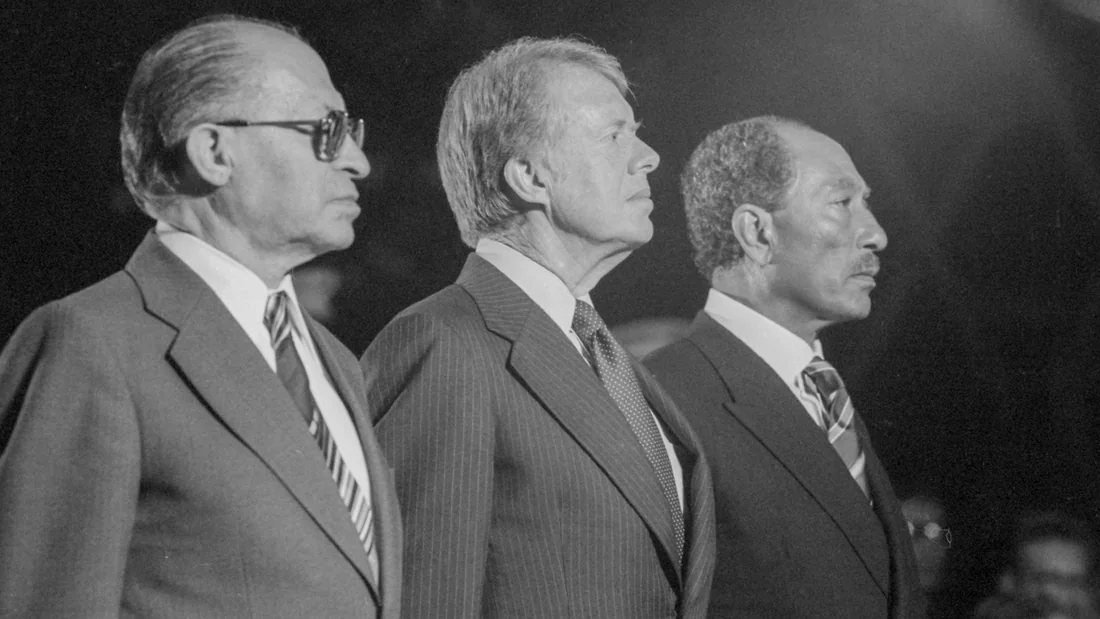
The retreat entered global vocabulary in September 1978. Jimmy Carter brought Egyptian President Anwar Sadat and Israeli Prime Minister Menachem Begin to the mountains for what was expected to be a short meeting.
It lasted thirteen days. The two leaders barely spoke directly for much of that period, and Carter shuttled between cabins carrying proposals. The talks nearly collapsed several times.
They produced two framework agreements, signed at the White House on 17 September 1978. One addressed peace in the wider region, and the other set out the path to a treaty between Egypt and Israel. That treaty followed in March 1979, and Sadat and Begin shared the Nobel Peace Prize.
The 2000 summit that did not work
The same setting produced a very different outcome in July 2000. Bill Clinton hosted Israeli Prime Minister Ehud Barak and Palestinian leader Yasser Arafat for two weeks of negotiations.
The talks covered the hardest questions, including the status of Jerusalem and the future of refugees. They ended without an agreement, and the region deteriorated sharply within months.
The contrast is instructive. Seclusion concentrates minds, although it cannot manufacture a deal that the parties are not ready to make.
How Camp David is run day to day
A permanent staff of Navy personnel maintains the site year-round, whether or not a president is visiting. Marine Security Company personnel handle the perimeter.
Costs are not published in detail, and the exact layout is deliberately vague in official material. Aerial photography of the compound is restricted, and published maps are intentionally imprecise.
The surrounding land is Catoctin Mountain Park, which the National Park Service operates and which is open to the public. The retreat itself is closed, and the boundary is clearly marked.
How Camp David compares with other presidential getaways
Presidents have always had private retreats, although most belong to them personally. Ronald Reagan had a ranch in California, George W. Bush had one in Texas, and several modern presidents have used family homes on the coast.
The Maryland compound is different in one crucial respect. It belongs to the office rather than the person, so every president inherits it fully staffed and fully secured. There is no set-up cost and no negotiation with local authorities.
That difference shapes how it gets used. A private ranch is a holiday; a government facility with secure communications is a workplace. Consequently the retreat has hosted cabinet meetings, war councils and treaty negotiations that a private property could never accommodate.
The security footprint around the mountain
Security extends well beyond the fence line. Road closures, restricted trails and a large aviation exclusion zone all come into effect when the president arrives.
Local residents in Thurmont are used to the pattern. Helicopter traffic increases, certain roads close at short notice, and the town fills briefly with official vehicles. Businesses there have lived alongside the arrangement for decades.
The aviation element draws the most public attention, mainly because intercepts generate video. In practice the ground security is the larger operation, and it is almost entirely invisible from outside.
What the record shows about Camp David summits
Judged purely on outcomes, the venue has a mixed record. The 1978 talks produced a treaty that has held for more than four decades, which is an extraordinary result by any measure.
The 2000 summit failed, and several smaller meetings produced nothing durable. Seclusion, in other words, is a tool rather than a guarantee.
Historians tend to draw the same conclusion. Camp David works when the parties arrive wanting an agreement and need somewhere to find one. It does not work as a substitute for that willingness, and no amount of woodland quiet changes that.
The retreat during national crises
Crisis use is the least visible part of the story, yet it may be the most important. Secure communications on site mean a president can convene the National Security Council without returning to Washington.
George H. W. Bush met his national security advisers there in August 1990, immediately after Iraq invaded Kuwait. Franklin Roosevelt received wartime briefings in the same compound half a century earlier. In 2001 the site was used for planning sessions in the weeks after the September 11 attacks.
The pattern is consistent. When an administration wants concentrated discussion without the choreography of the West Wing, it heads for the mountains. Decisions taken there tend to surface publicly days later, which is exactly the intention.
That history is why an early departure attracts notice. Presidents go to the retreat to think, so leaving it ahead of schedule reads as a decision already made. Whether that interpretation is correct this weekend is not yet clear, and the administration has not said.
What we still do not know
Several questions remain open. The White House has not explained the schedule change, and no formal statement has linked it to the Iran situation.
Equally, the identity of the intercepted pilot has not been released, and enforcement decisions in such cases usually take weeks. We will update this report as the picture becomes clearer.
Frequently asked questions
Where is Camp David?
It lies in the Catoctin Mountains near Thurmont in Frederick County, Maryland, about 60 miles north-west of Washington DC.
Can the public visit Camp David?
No. The compound is a closed military facility. Visitors can hike in the surrounding Catoctin Mountain Park, although the retreat itself is off limits.
Why is it called Camp David?
Roosevelt originally named it Shangri-La. Eisenhower renamed it in 1953 after his grandson, David Eisenhower, and the name stuck.
How often do presidents use it?
Usage varies enormously. Some presidents visit most weekends, while others go only a handful of times a year. The pattern usually reflects personal preference rather than policy.
Who pays for the facility?
It is funded through the Department of the Navy as a military installation. Detailed figures are not published, largely for security reasons.
What happens if a plane enters the no-fly zone?
Fighter aircraft intercept and attempt to make contact, sometimes using flares. The aircraft is escorted out, and the pilot can face enforcement action from aviation authorities.
The bottom line
For 80 years this patch of Maryland woodland has done two jobs at once. It gives presidents somewhere to think, and it gives American diplomacy a room with no exit.
This weekend it played both roles in miniature: a secure retreat during a tense moment abroad, and a piece of restricted airspace that a stray pilot found the hard way. Read more in our politics coverage, and see how we report on the about page. Background on the surrounding park is published by the National Park Service.
Leave a Reply